Structural Drying & Dehumidification in Alexandria, VA
Surface-dry is not dry. The crews pull moisture out of wall cavities, subfloor, and slab with air movers and commercial dehumidifiers, then verify every space with daily meter readings before crews pack up.
(571) 339-3020Tap to call the 24/7 dispatch line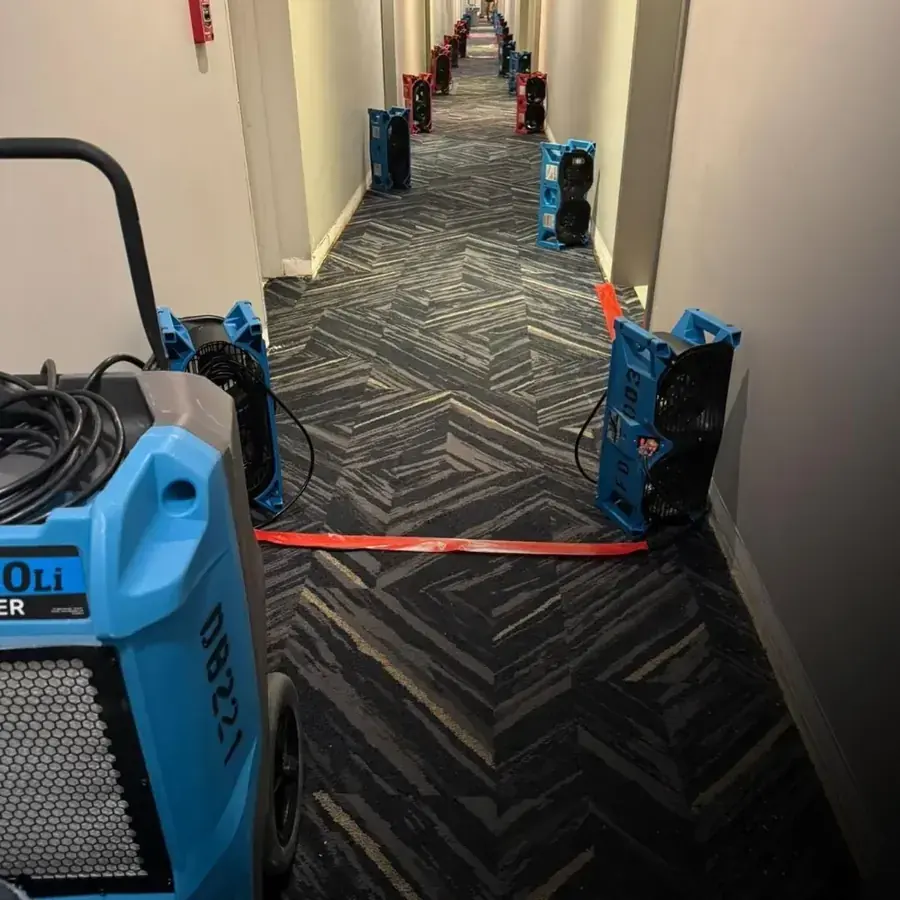
Once the standing water is gone, the harder problem is the water you cannot see. Moisture soaks into drywall, wall cavities, subfloor, insulation, and even the concrete slab, and a room that feels dry to the touch can still be holding enough water to feed warping, swelling, and microbial growth. In Del Ray bungalows and the newer Potomac Yard townhomes alike, the crews dry the structure itself to a measured target, not just the surface, so the loss stops where the water stopped.
Drying to a verified standard, not the surface
The difference between a proper dry-out and a quick one is measurement. Crews set a dry goal from unaffected materials in the same building, then work every wet assembly until it reads back to that goal.
- Moisture meters and thermo-hygrometers map how wet each material actually is
- Wall cavities, subfloor, and slab are read, not just walls you can see
- Daily readings are logged so progress is documented, not guessed
- Equipment stays until the numbers hit the dry standard, then comes out
Crews dry to the applied structural drying standard published by the IICRC, the same certification the technicians carry.
How the drying system works
Drying is a balance of airflow, dehumidification, and temperature. Air movers lift moisture out of materials into the air, and dehumidifiers pull that moisture back out of the air so it does not resettle elsewhere in the home.
- High-velocity air movers placed to sweep wet walls, floors, and cavities
- Commercial dehumidifiers sized to the wet volume, not a rented household unit
- Cavity drying with wall vents or injection where water is trapped behind finishes
- Containment so the equipment dries the loss, not the whole house
If water is still coming up out of carpet, pad, or a slab, crews handle the water extraction and removal first, then set the drying system over the cleared area.
Water sitting in your walls or subfloor in Alexandria? Call now and crews will set a monitored drying system, on site day or night across Northern Virginia.
☎ Call (571) 339-3020Why proper drying prevents secondary damage
Water left in the structure does not sit still. It wicks up studs, cups hardwood, delaminates subfloor, and creates the damp, dark conditions that turn a clean water loss into a bigger repair weeks later. A verified dry-out is what keeps a one-room event from becoming a gut. The same discipline protects the framing behind a flooded basement and the joists above a wet crawl space.
- Stops warping, swelling, and delamination of floors and trim
- Removes the trapped moisture that microbial growth needs
- Protects insulation and framing you would otherwise have to tear out
Fixing the leak that caused it matters too. The EPA WaterSense program has plain guidance on finding and repairing the household leaks that lead to these losses. Crews document the whole dry-out and bill your insurer directly.
How structural drying and dehumidification is handled in Alexandria
Call and dispatch
The response team answers 24/7, and the nearest Alexandria crew heads out with pumps, air movers, and moisture meters.
On-site assessment
The crew finds the source and the full reach of the water, including what soaked into subfloor, wall cavities, and below-grade space.
Extract and dry
The extraction crew pulls the standing water, then runs air movers and commercial dehumidifiers to a verified dry standard, not just the surface.
Verify and document
Moisture readings are logged until the structure is dry, then the loss is documented with the photos and daily readings an adjuster needs to move a claim.
Why Alexandria calls the local water damage pros first
Rapid local response
The response team answers 24/7, and the nearest crew heads out the moment you call, day or night, across Alexandria and Northern Virginia.
IICRC S500 drying standard
Trained crews with pumps, air movers, and moisture meters dry to a verified standard, not a mop and a fan.
Claim-ready documentation
The loss is documented with photos and daily moisture readings, the paperwork an adjuster needs to move a claim.
Local water experts
Tidal Old Town, Cameron Run flooding, pre-1980 plumbing, and finished basements, so the local pros know how water moves here.
From Alexandria across Northern Virginia
Alexandria water damage pros respond across the city and Fairfax County, day or night, with rapid local response.
Alexandria water damage pros cover the city and the near Northern Virginia suburbs, day or night, with rapid local response.
Coverage runs across Alexandria, Old Town, Del Ray, Kingstowne, Franconia, Mount Vernon, Huntington, Arlington, Springfield, Annandale, and Falls Church.
See every neighborhood and ZIP covered ›Related restoration services
Alexandria water damage questions, answered
Why do I need structural drying if the floor already feels dry?
A surface that feels dry can still hold water inside the drywall, subfloor, and slab. Crews use moisture meters to read the materials themselves and keep drying until they reach a verified dry target, because trapped moisture is what causes warping and growth later.
How long does structural drying take in an Alexandria home?
Most losses dry in three to five days, but it depends on how wet the materials are, the type of flooring, and airflow. Crews take daily readings and keep equipment in place until the numbers hit the dry standard rather than pulling it on a fixed schedule.
What equipment do you use to dry the structure?
High-velocity air movers to lift moisture out of materials and commercial dehumidifiers sized to the wet space to remove it from the air. Where water is trapped in wall cavities crews add cavity drying with vents or injection so finishes do not have to come out.
Can I just use my own fans and a household dehumidifier?
Household units cannot move or remove enough moisture to dry a real water loss, and without meter readings you cannot tell when the structure is actually dry. Undersized drying is the most common reason a clean water event turns into a bigger repair weeks later.
How do you know when the drying is finished?
Crews set a dry goal from unaffected materials in the same building, then read every wet assembly daily. When the wet materials read back to that goal, the structure is dry by measurement, the equipment comes out, and the readings are documented for your claim.
Do you dry the wall cavities and subfloor, or only the visible surfaces?
Both. Water hides in wall cavities, under flooring, in insulation, and in the slab. Crews read and dry those hidden assemblies, using containment and cavity drying where needed, so the moisture behind the finishes is gone and not just the surface.
A local Alexandria crew is standing by
Water sitting means damage spreading. Call Power CDC Restoration and a local crew heads out across Northern Virginia, day or night.
(571) 339-3020Call now, a local crew picks up day or night